On 15 November 2025, the Max Born Wrocław Research Alliance was established. The agreement was concluded between Wrocław University of Science and Technology and two institutes of the Polish Academy of Sciences: the Institute of Immunology and Experimental Therapy and the Institute of Low Temperatures and Structural Research.
The initiative aims to integrate the scientific and infrastructural potential of three leading research centers in the country. The collaboration focuses on the fields of mathematics, physics, chemistry and medicine.
One of the best technical universities in Poland. In line with its strategy, it focuses on the development of artificial intelligence, cybersecurity, and Medicine 4.0. Within the alliance, it will concentrate on interdisciplinary research in mathematics, physics, chemistry, and medicine.
Through cooperation with the PAS institutes, young researchers and doctoral students from the university will benefit from the research potential and infrastructure of three leading Polish scientific units. As a result, Wrocław University of Science and Technology will become even more competitive internationally.

A renowned research unit holding the prestigious A+ scientific category. It specializes in advanced research in immunology and experimental medicine. Participation in the alliance enables the institute to meet global scientific trends and expand its potential through collaboration with experts from Wrocław University of Science and Technology. The institute aims to increase research efficiency, optimize costs, and jointly educate future scientific staff in key biomedical areas.

A leading Polish research unit with an A+ scientific category. For nearly 60 years, it has conducted fundamental research in physics and chemistry, driven by scientific courage and curiosity. It brings extensive experience in structural research to the alliance, enabling the creation of inter-institutional research teams and providing young researchers with access to unique resources. Through the alliance, scientists at the institute gain new developmental opportunities and the ability to conduct interdisciplinary research.

An innovative research unit and part of the Łukasiewicz Research Network, one of the largest of its kind in Europe. The institute specializes in advanced projects in the fields of medical biotechnology, life sciences, and materials engineering. Participation in the Alliance enables the institute to expand its interdisciplinary research and strengthen the link between science and the economy. The institute is committed to supporting young researchers and implementing modern technologies that enhance the efficiency of R&D activities.
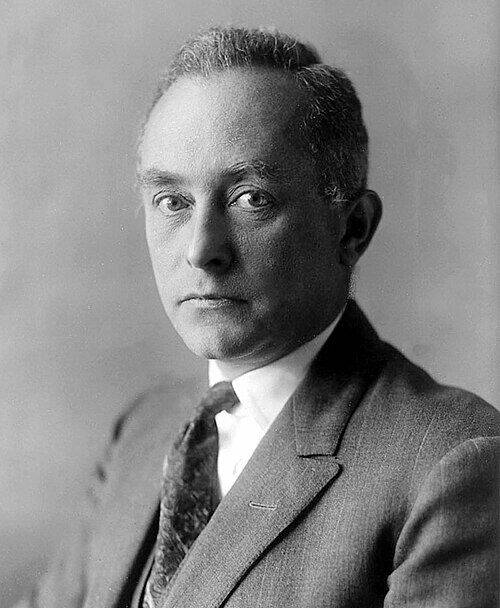
The patron of the alliance is Max Born, a distinguished Wrocław-born Nobel laureate, physicist, and mathematician.
He was born on 11 December 1882 in Wrocław and died on 5 January 1970 in Göttingen. He is one of the main founders of quantum mechanics, alongside Heisenberg and Schrödinger, giving empirical meaning to their equations.
In 1954, he was awarded the Nobel Prize in Physics “for fundamental research in quantum mechanics, especially for the statistical interpretation of the wave function.”
Max Born came from a family with deep intellectual traditions—his father, Gustav Born, was a prominent professor of anatomy and embryology at the University of Wrocław. It was there that his son Max began his higher education, studying mathematics, physics, and chemistry. Although his career flourished in Göttingen, where he established one of the world’s most significant centers for theoretical physics, his Wrocław roots remained a vital part of his identity.
His contribution to science extends far beyond the mere mathematization of phenomena. It was Born who introduced the concept of probability to the wave function in physics, revolutionizing our perception of matter. He proved that at the atomic level, we cannot predict the precise position of a particle, but only the probability of finding it in a specific location. This discovery became the foundation for modern electronics, nanotechnology, laser technology, and magnetic resonance imaging (MRI).
Born was not only a brilliant researcher but also an outstanding educator. His assistants and students included many future Nobel laureates, such as Robert Oppenheimer, Maria Goeppert-Mayer, and Werner Heisenberg. His school of thought was characterized by close collaboration between mathematicians and physicists—a model that remains a benchmark for modern research consortia today.
The choice of Max Born as the patron of the Wrocław Scientific Alliance carries both symbolic and substantive weight. As a scholar who moved seamlessly between mathematics, physics, and physical chemistry, he embodies the interdisciplinarity that is the cornerstone of the collaboration between the Wrocław University of Science and Technology and the institutes of the Polish Academy of Sciences.
His scientific legacy—from quantum mechanics to research on crystal lattice dynamics—directly corresponds with the research profiles of the Alliance partners: low-temperature physics, structure of matter, and advanced chemistry and medicine. This patronage underscores Wrocław’s ambition to be a European center of science, bridging historical excellence with modern innovative potential.